SADR STONE · Architecture journal
Decorative concrete in kitchens
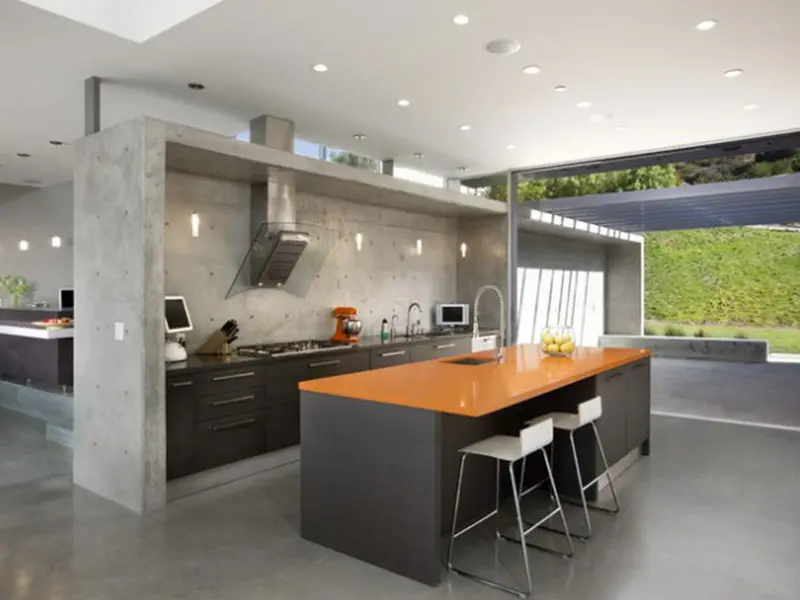
Kitchen materials need to balance appearance with cleaning, moisture, heat and everyday use. Decorative concrete may be suitable for a selected wall or feature area, but a wall tile, worktop and sink have different performance requirements.
Do not confuse cement-based decorative stone with acrylic or polyester-resin solid surfaces. The archive discusses both, but they are not interchangeable products. A concrete surface should not automatically be described as non-porous, stain-proof, germ-resistant or seamless.
For a backsplash, consider splashes, cooking oils, food acids and the cleaning products that will be used. Ask whether a compatible protective finish is required and how it is renewed. A textured surface may demand more cleaning than a smooth one. Test an inconspicuous sample before applying a treatment.
Worktops and sinks need explicit approval for their intended use, suitable support and correctly detailed joints. Weight, cut-outs, plumbing and thermal exposure require a coordinated design. Decorative facing tiles must not be assumed to perform as a worktop system.
Environmental comparisons should include the binder, raw materials, energy, transport, useful life and disposal or reuse. Choose with a physical sample and written care instructions. Have the installation carried out to the approved system, including waterproofing where required, rather than relying on broad claims about all artificial stone.