SADR STONE · Architecture journal
Combining wood and exposed concrete
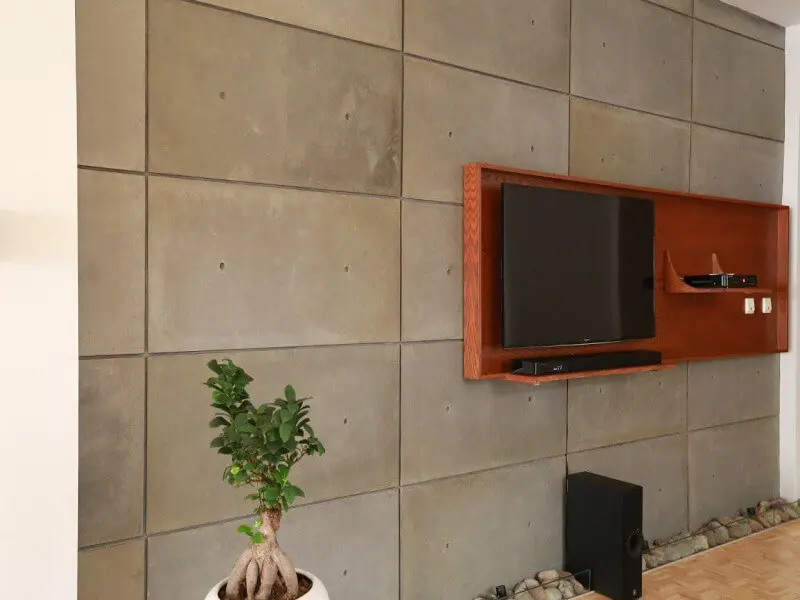
Exposed-concrete interiors draw on an industrial vocabulary: visible material, clear joints and restrained surfaces. They can be combined with glass, exposed services or contemporary furniture, but an industrial appearance does not require every construction component to remain uncovered.
Wood and concrete work through contrast. Concrete contributes a mineral surface and often a cool grey palette, while timber introduces grain, warmer colour and a different tactile quality. The balance can be achieved with timber joinery, beams, furniture or a limited feature area rather than equal quantities of both materials.
Concrete finishes are not limited to a rough grey wall. Smooth or textured moulds, pigments and panel proportions change the effect. A sample under the proposed lighting is more useful than selecting from an isolated photograph. Brick can add another texture, although too many strong surfaces may compete.
Detail the junction between materials carefully. Timber responds to moisture differently from concrete, so allowances for movement and suitable fixing are needed. In bathrooms or outside, both the wood specification and the concrete installation need exposure review.
Wood-effect concrete is a separate option for a timber-like visual rhythm. It is not natural wood or thermowood, and its weight, touch, joints and maintenance differ. Choose between real timber and a concrete interpretation according to the intended use and approved sample, not just the product name.