SADR STONE · Architecture journal
Concrete façades in hot and humid climates
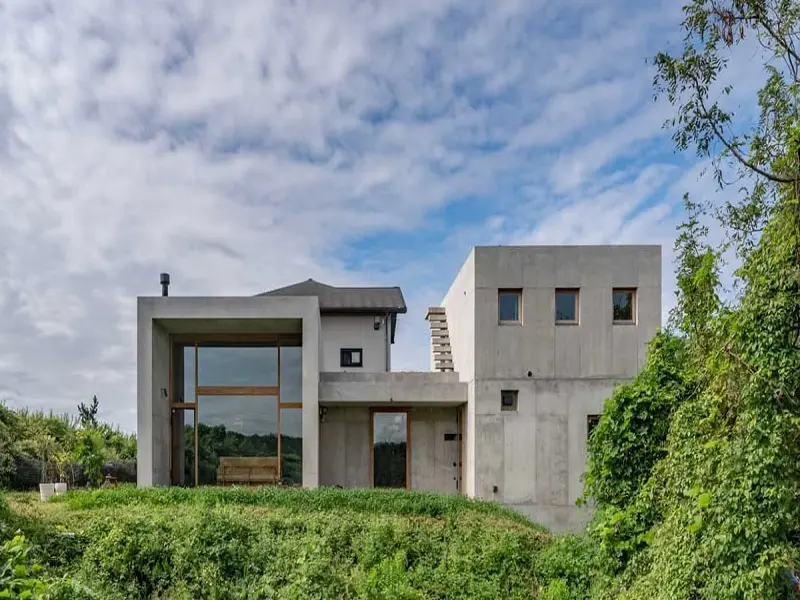
Hot and humid climates require the façade to manage heat, rain and moisture together. Exposed-concrete cladding can contribute a durable architectural surface, but a thin decorative tile is not itself a complete thermal or moisture-control system.
Energy performance belongs to the whole wall, roof, glazing and building-services design. Thermal mass and insulation are different properties. A wall's U-value describes heat transfer through the complete assembly. The historical archive includes regional examples and older numerical claims, which should not be treated as current code requirements or guaranteed energy savings.
In air-conditioned buildings, temperature and vapour-pressure differences can drive moisture through the envelope. The location of vapour-control layers must follow a climate-specific analysis. Simply adding a highly resistant layer anywhere can trap moisture rather than solve the problem.
Distinguish efflorescence from mould. Efflorescence is a deposit of soluble salts transported by water. Mould is biological growth and depends on moisture and suitable conditions. Neither is prevented merely by calling a surface concrete. Leaks, trapped water and poor detailing must be addressed at their source.
Façade design should coordinate flashings, drainage, joints, insulation continuity, fixings and maintenance access. Confirm exposure suitability and cleaning methods for the chosen tile. A breathable or water-repellent treatment needs compatibility review, including its effect on appearance.
Assess operating costs using the actual building and climate. For spaces with demanding environmental requirements, specialist envelope and ventilation design remains essential. Concrete cladding can be part of that design, but it does not alone guarantee healthy indoor air or a particular payback period.