SADR STONE · Architecture journal
Concrete surfaces around pools
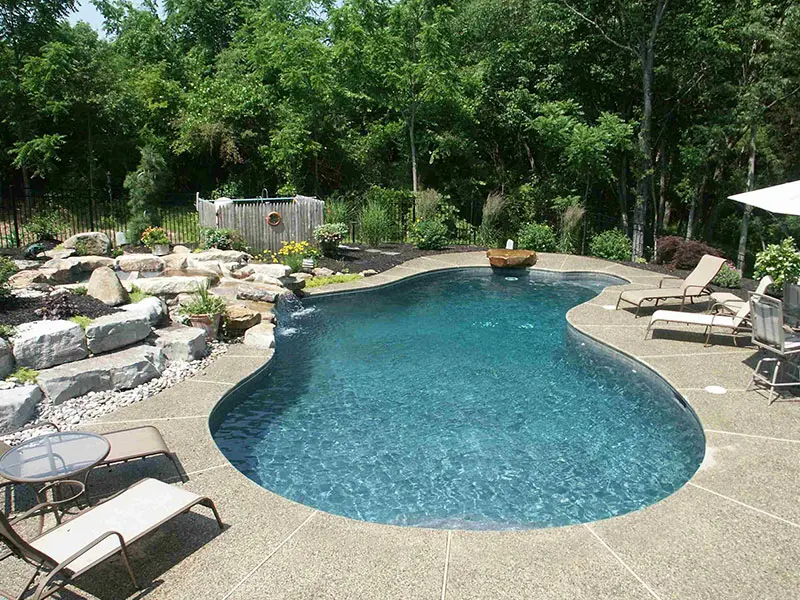
A pool is often the focus of a garden, so the surrounding surfaces should work with the house, planting, seating and circulation. Privacy screens and planting can soften boundaries and conceal equipment, provided they do not obstruct maintenance or safety requirements.
Choose planting with attention to leaf fall, debris and the activities around the pool. Furniture placement should preserve clear routes. The finish around the water must be comfortable and suitable for barefoot use rather than selected only for its colour in a photograph.
Decorative concrete offers straight or curved layout possibilities through the chosen tile shapes and site detailing. Smooth, textured and exposed-aggregate appearances produce different visual effects. Large-format units can reduce the number of joints, but their handling, falls and support still need planning.
Exposed aggregate may provide texture, yet roughness is not the same as verified wet slip resistance. Surface temperature, edge comfort, cleaning, pool chemicals and drainage must be assessed for the actual finish. A sealer can change both appearance and traction.
Treat the pool shell, waterproofing and surrounding paving as different parts of the construction. Obtain approval for the product's precise location, install the required movement joints and maintain drainage. The project sample should be assessed in wet conditions as well as dry.